Thursday, 3 January 2019

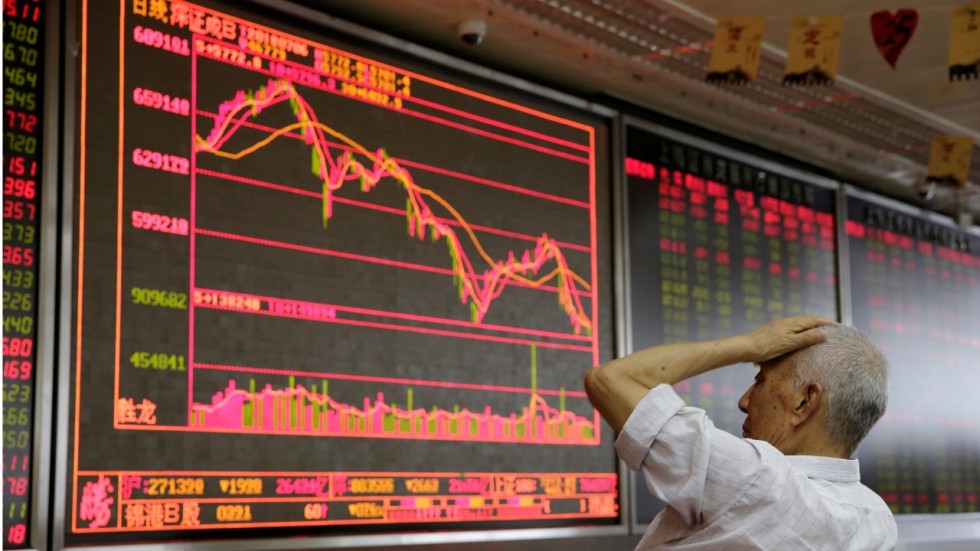
20 Nifty stocks fell 15-60% in 2018; Should you invest in beaten-down names?

Beaten-down stocks make for an interesting investment case, but the challenge is to figure out whether the underperformance is temporary or structural in nature.



Image result for small cap and midcapInvestors are always on a lookout for stocks that could give quick returns and are also available at fair valuations. The year 2018 was not a good one in that sense - while returns from benchmark indices were merely in single digits, many quality stocks corrected in double digits.
Nifty50 recorded gains of little over 3 percent in 2018, while nearly 60 percent of the index components gave negative returns.
So, are all the stocks that have seen a double-digit cut in 2018 attractively valued? Well, that might not be the case always, suggest experts. It does make a good investment case, especially if they are Nifty50 companies, but investors should also study the reason why the stocks fell in the first place, they say.
Beaten-down stocks make for an interesting investment case, but the challenge is to figure out whether the underperformance is temporary or structural in nature. Heavily beaten-down stocks have major structural challenges like Tata Motors which is seeing a major global slowdown.
However, if the challenges are internal and the management has the capability and ability to resolve the issues then the stock will make for an investment case. Sun Pharma is one such case and it presents with a good investment case.
Kulkarni further added that in 2019 some beaten-down stocks like Yes Bank and Sun Pharma could perform well if they are able to resolve the internal issues, but if the challenges are structural in nature like in case of Tata Motors and Tata Steel then the time is not ripe for these stocks.
Out of Nifty 50 stocks, 20 counters fell 20-60 percent in 2018, which includes Tata Motors, Yes Bank, Bharti Airtel, HPCL, Vedanta, and BPCL.
stocks table
The S&P BSE Largecap index recorded gains of over 1 percent as compared to small & midcap indices which fell by 13 percent and 23 percent, respectively, in 2018.
The first rule of investing is to look at the earnings growth of the company. The divergence between good quality growth-orient companies and value stocks is still very high. Most experts advise investors to stay with quality names or largecaps as volatility could rise ahead of general elections.
Largecaps might not give multibagger returns, but they play a crucial part in protecting your capital in case momentum starts heading south.
We expect volatility to be high in the first half of CY19. Hence, it will be ideal to stay invested only in good names where one is confident of any earnings improvement or business cycle changing in FY20 (at least till election results come through).
We would not suggest an across-the-board investment in beaten-down stocks. We would recommend investing in only a few names like Tata Motors, oil & gas companies, and select names like Eicher Motors where valuations have become reasonable.
Oza further added that one should avoid getting into beaten-down companies which have issues beyond fundamentals, like corporate governance or bleak sector outlook. Post-election results, if we see either a BJP/Congress-led coalition government then one can get into select beaten-down largecaps.
MORE WILL UPDATE SOON!!

Bank of Baroda-Dena, Vijaya Bank merger: Brokerages say time to ‘buy’

The swap ratio appears fair in respect to Dena Bank owing to the multiple challenges faced by the bank, and most experts feel that Vijaya Bank shareholders have nothing to gain from this merger.

  Image result for bank merger


Most global as well as domestic brokerage firms such as Nomura, Motilal Oswal as well as Kotak Institutional Equities maintain their buy or add rating on Bank of Baroda after the share swap ratios were announced for a merger with Dena and Vijaya Bank.
Shareholders of Dena Bank will receive 110 equity shares of BoB for every 1,000 shares they hold. Vijaya Bank shareholders will get 402 equity shares of BoB for every 1,000 shares they hold. The swap ratio clearly seems to be in favor of BoB shareholders, suggest experts.
The next big questions is – should one buy Bank of Baroda now? Well, analysts at top brokerage firms maintain their positive stance on the stocks after the swap ratio announcement.
"BoB’s board has decided on the merger ratio for the amalgamation of Dena Bank and Vijaya Bank, implying a 6-27 percent discount to the current prices of Dena/Vijaya Bank and 18-43 percent lower than BOB’s Sep-18 valuation. We believe this is fair for BOB’s shareholders given BOB’s superior franchise and NPA coverage position.
The merger will be ~4% book-accretive (increase the book value) to BOB and ~4% earnings-dilutive. BOB trades at 0.65x Sep-20F book on an adjusted basis, which we believe is undemanding, hence maintain our Buy rating. We prefer corporate banks of the India financials, with Axis/ICICI, but remain positive on SBI/BOB.
BoB merger
The swap ratio appears fair in respect to Dena Bank owing to the multiple challenges faced by the bank, and most experts feel that Vijaya Bank shareholders have nothing to gain from this merger.
But, for Bank of Baroda, the merger will lead to the creation of the third largest lender in India, with an advances and deposits market share of 6.9 percent and 7.4 percent, respectively.
The retail book of the merged entity will increase to 20 percent of total loans (16% for BoB standalone) due to a higher retail book of Vijaya Bank. The combined entity will have a CASA mix of 33.6 percent, with a Credit-deposit ratio of 70.7 percent (71.4% for BOB standalone). Post-merger, the number of PSBs will reduce to 19 from 21 now, said a report.
While the process of merging multiple entities will present its own set of challenges in the near term, BOB stands to benefit over the long term, in our view.
We will look to revise our estimates on attaining more clarity on the growth and earnings trajectory. We maintain our Buy rating with an unchanged target price of INR140 (1x Sep-20E ABV).
Kotak Institutional Equities in a note said that the focus now shifts to actual integration from financials. It maintains an ‘ADD’ rating with fair value unchanged at Rs 130 for Bank of Baroda.
The challenges of integration of IT systems, employee satisfaction, branch rationalization, client experiences at the time of merger are issues that are hard to model.
Even though most brokerage firms see the merger as a positive step for Bank of Baroda, two global brokerage firms namely -- Morgan Stanley and JPMorgan maintain their Underweight or Neutral rating on the stock.
Morgan Stanley maintained its underweight rating on Bank of Baroda with a target price of Rs 95. The global investment bank expects 30 percent dilution for BoB and trailing BVPS accretion or book value of equity per share of around 15 percent. It expects BoB to see material moderation in credit costs.
JPMorgan maintained its Neutral rating on Bank of Baroda with a target price of Rs 100. The global investment bank is of the view that the merger swap ratio alleviates pricing concerns.
Merger synergies will take a long time to play out, and it is of the view that the next round of PSB mergers is likely to follow only post-elections.
MORE WILL UPDATE SOON!!

Positive on corporate banks, cement and consumption themes in 2019:

Investors should continue to focus on stock selection and overlook the clamour that we would hear over the next 6 months, as we approach the general election.

Related image

India is in the midst of a structurally high growth phase and remains the fastest growing economy in the world with IMF projecting 7.3 percent and 7.5 percent GDP growth rates for FY19 and FY20, respectively.
However, 2019 will be earmarked with uncertainties pertaining global as well as domestic factors. There would be two different and powerful developments that are expected to influence the world markets, viz. a)return to pre-crisis normalcy in the global monetary system and b) an uncomfortable new normal in international politics and global relations.
The withdrawal of monetary stimulus coupled with a rate rise in the US conspicuously left the markets more vulnerable to the political shock of escalating international trade war, in particular.
We expect the global expansion to continue in 2019 despite risks emanating from politics and international relationships, as the economic expansion outside the US would provide the necessary fillip to world economic growth.
The market performance in 2018 was a contrast to 2017 with most of the equity markets falling hitherto, while on the flip side, 2017 had seen a steep rise.
Although volatility will rule the roost, we do expect 2019 to be a good year of performance for equities. The pace of monetary policy normalisation in the US is slated to slow down, as the positive impact of fiscal stimulus on economic growth starts waning away.
This should culminate in dollar weakness in 2019, which will, in turn, bode well for emerging markets (EMs). The trend of ~15 percent divergence between the performance of developed and emerging markets since the inception of the year should perhaps reverse in 2019.
With respect to India, the benefits of implementation of several structural reforms such as introduction of Goods & Services Tax (GST), Insolvency & Bankruptcy code (IBC), RERA, JAM (Jan Dhan, Aadhar, Mobility) have started to manifest in the growth numbers and will aid in removing inefficiencies from the economy and formalising the same.
Corporate earnings have started picking up after a lag of 4-5 years. Albeit, the net profit (PAT) growth in Q2FY19 was at a mere 10 percent, the revenue growth was at a multi-quarter high.
The PAT growth was essentially impacted by higher input costs (crude linked, metals, etc.) which ideally should reverse going forward, as most of these prices have eased.
For FY20, we expect to see high teens earnings growth led by normalisation of the earnings for the banking stocks, a surge in infrastructure related CAPEX and consumption ahead of general elections.
On the valuations front, while the Nifty looks optically at an elevated level, it is only a handful of stocks that are holding the Nifty. Post the recent correction, the excessive valuations, especially in midcaps and smallcaps have also settled down.
The market has reverted to near long-term averages, which makes them attractive. While we are cognizant of the near-term events such as elections, which could inject a bout of volatility, we believe it will not have any material impact over the longer run, irrespective of the result.
We believe the volatility in the markets over the next few months will provide a good opportunity to build a quality portfolio from the long-term standpoint, as India is firmly entrenched on the growth path.
Sectors in focus:
We remain positive on the corporate banks. We believe that we are transitioning from the asset quality recognition phase to resolution phase as testified by the initial success seen in the NCLT cases, wherein the recovery rates have been either inline or better than estimates.
Besides, incremental stress formation has reduced significantly, as reflected in the Q2FY19 results of all corporate banks. Going forward, with the normalisation of credit costs, we expect a significant turnaround in profitability and return ratios of banks.
We also have a positive view for the cement sector, as we expect the capacity utilisation for the industry to go up, which will eventually bring back the pricing power in the sector.
Furthermore, the input costs have been truncating due to fall in crude oil prices and some appreciation of INR, which should aid profitability going forward.
We remain bullish on the discretionary consumption space as most of the impeding factors such as high crude, up fronting of insurance costs, and credit squeeze due to NBFC issues, which led to a muted festive season, have now reversed.
We expect to see the continuation of the premiumisation story play out in the discretionary consumption arena.
What should be the investment philosophy of investors?
Investors should continue to focus on stock selection and overlook the clamour that we will hear over the next 6 months, as we approach the general elections.
We are a firm believer in the long-term India story due to its very large consumer base, increasing affluence and strong demographic dividend. We would advise investors to deploy capital in a systematic manner and not time the market to take advantage of this large long-term opportunity.
Compounding of capital will be more important than timing the markets. The stock prices over longer-term always follow the earnings cycle and hence that is where the focal point should be for the investors.
Staying on the course is what makes one a successful investor. If you are investing for the next five to ten years, the focus should be on the opportunity and ways to harness it.
One should align their investments as per one’s goals and risk profile and use market corrections to their advantage to invest for the long term.
MORE WILL UPDATE SOON!!

India likely to grow faster than many nations, 2019 to be year of mid and smallcaps

Investors need to be more selective then usual with their decisions by sticking to quality of earnings & corporate governance, strong financials and growth prospects.

  Image result for small cap and midcap

2018 turned out to be the most volatile and eventful year for Indian market and economy where the benchmark indices hit an all-time high before witnessing a sell-off mainly driven by rising crude oil prices, depreciating international currencies, increasing trade protectionism, geopolitical updates, outflow by FIIs, macroeconomic data and corporate events.
But moving towards 2019, India has witnessed a huge positive change and a major boost in the economy with a sharp correction in Brent crude prices that helped in appreciation of the Indian rupee. This will further result in narrowing current account deficit, lower subsidy payout, lower risk of inflation and increased room for RBI to cut interest rate.
Politics along with economic headwinds would be a major factor influencing equity market in 2019. All eyes are focused on the general election of 2019 but after the outcome of recent state elections, it is observed that there could be volatility but not much divergence in the market.
Moreover, new reforms by the upcoming government will be the launch-pad that the markets will be looking for.
Steps taken by the government and the Reserve Bank of India (RBI) to ease rules on foreign borrowings and bonds would stabilise the rupee and rein in the current account deficit (CAD). Rising Indian inflation would be one of the most keenly watched numbers and the RBI might impose corrective measures to curb it by controlling liquidity or by increasing the interest rates.
Further, the government and RBI are in consultations over the liquidity squeeze that has gripped non-banking finance companies (NBFC). The government feels RBI opening a special liquidity window for NBFCs apart from banks, honouring credit lines already sanctioned to them will help.
Globally, markets will watch bond yields and how the geopolitical tensions pan out. Turbulence for global markets may emerge from Italy, Turkey, Brexit and the Middle East. The steps of the Federal Reserve would be keenly observed.
Moreover, the incremental tariffs by the US on Chinese goods may dominate market moods in the coming year. Brent crude prices will float
around $60 a barrel and will halt the recent fall as the OPEC and non-OPEC members' new deal takes effect to reduce oil output.
Valuation parameters after the recent correction have become reasonable and the market looks attractive with visible growth earnings and strong fundamentals. 2019 will be the year of small-cap and mid-cap stocks along with positive participation from FIIs.
Significant fall in the commodity prices would also help markets to outperform other global markets. Indian rupee will remain strong and keep trading at around 70 and below against dollar.
The market scenario would be flat to mildly positive, at least until the general elections and Nifty will close the FY19 at around 10,500.
Going ahead with positive macro newsflows, there is a possibility of Nifty hitting 12,000. Nevertheless, in an unforeseen event, levels of 9,700 cannot be ruled out.
It's easy for emotions to overwhelm investing decisions, but now is the time to put the rule of 'buy low and sell high' into action.
Indian markets will maintain its upmove with a fair share of volatility. Investors need to be more selective than usual with their decisions by sticking to earnings quality and corporate governance, strong financials and growth prospects.
On the whole, we expect India to grow faster than many nations and long-term outlook for the domestic market continues to be strong.
We recommend buying the following stocks with an upside potential of around 15-20 percent from the current level with an investment horizon of 9-12 months:
Larsen & Toubro
L&T is well-placed to benefit from several big-ticket projects, as it satisfies all basic requirements, i.e., balance-sheet size, strong track record, technical expertise and adequate liquidity to bid for such projects.
Recovery in domestic business, order inflow and execution in domestic infra segment, focus on improving RoE and working capital, healthy execution of large order backlog and strong performance of key subsidiaries will strengthen the growth trajectory ahead.
Maruti Suzuki India
MSIL is working towards its commitment to bring electric vehicle in India by 2020. MSIL's largest distribution network across the country, strong performance, strong product pipeline, new launches, next level of excellence in product design with updated technology, better product mix and ramp-up of Gujarat plant would moderate margins in the long run.
Phillips Carbon Black
Government's 'Make in India' programme and anti-dumping duty on imports of CB from China has resulted in PCBL's high sales volume. Its increase in cash flow and improved working capital management has helped in reducing the leverage burden and overall reduction in debt.
PCBL with its technical superiority and cost efficient operating model is expanding its product portfolio which will help in reporting better numbers.
RBL Bank
RBL's robust and diversified loan growth trajectory, well-maintained asset quality coupled with healthy margins, leveraging technology to acquire-engage and service clients, enhancing distribution through a combination of owned branches, and business correspondents, partnerships and acquisitions and highly capable management give a positive outlook for the bank.
Tamil Nadu Newsprint and Papers
Tamil Nadu Newsprint and Papers (TNPL) has emerged as the third largest player in the Indian paper industry with a wide range of portfolio. Consistent economic growth and greater emphasis for education show there is a big market/scope for the company like TNPL to grow going forward.
Paper industry has to face continuous YoY increase in zero duty imports of paper and packaging board under Free Trade agreements along with shortage of raw materials but TNPL has managed the above challenges by matching its capability, increasing capacity, performance and continuous R&D towards recycling and reuse.
MORE WILL UPDATE SOON!!

Sunday, 30 December 2018

Saturday, 27 October 2018

MARKET OUTLOOK AND WEEK AHEAD

Equity benchmarks continue to witness sharp decline as it closed lower by more than 2.5% during previous week on the back of weak global cues. Index closed lower for four out of the five trading sessions during previous week. Nifty formed an intraweek high of 10408 on Monday's session and kept on dragging lower as the week progressed. Index breached its recent low (10138) and formed a seven month’s low of 10004 on Friday’s session. Broader markets also continue to witness sharp decline as the Nifty Mid cap and small cap indices closed lower by 1.7% and 4.2% respectively.

Image result for week ahead
The S&P BSE Sensex closed at 33349, down by 966 points or 2.8% while the NSE Nifty closed at 10030, down by 273 points or 2.7% for the week.
Among the Nifty Constituents, Bharti Airtel, HDFC, Coal India, Bajaj Finance and Titan were the major gainers for the week.
Whereas the Asian Paints, ITC, Axis Bank, Indusind Bank, State Bank of India, Yes Bank, ONGC, Reliance Industries, Cipla, Sun Pharma, Grasim, Ultratech Cement, Infosys, TCS, Tech Mahindra, JSW Steel and Zee entertainment were the major draggers for the week.
Indian benchmark indices traded lower during the week amid negative global cues and weak corporate earnings.
On the data front, India's fiscal deficit touched 95.3% of budget estimate in H1FY19, compared with 91% at the same time last year as per media sources.
On the news front, as per a Supreme Court decision, only vehicles compliant with BS-VI emission norms would be allowed to be sold in India with effect from 1st April, 2020. In real estate, as per Anarock Capital report, NBFC's exposure towards the sector is 7.5% accounting for 1.65 lakh crore.
In oil and gas sector, the government is planning gas pricing reform by permitting trading of all domestic supply on a local exchange, slated for year-end opening. SEBI has formalised in a circular certain provisions relating to mutual fund expenses and scheme performance disclosure.
It has laid down that all scheme expenses be paid out from scheme accounts only and not from the AMC books.
Brent Crude was down by ~4.2% to US$ 76.44/barrel as compared to previous week's close of US$ 79.8/barrel.
Gold prices went up by 0.73% to $1234/ounce as compared to last week's closing price of $1225/ounce.
Bond yields closed slightly lower at 7.88% as against last week's closing of 7.93%.

Week Ahead

Historically, within a structural uptrend, secondary corrections of 13-15% have been in a norm. Time wise, since the beginning of CY18, each directional leg in the Nifty has lasted for seven to eight weeks.
In the present scenario, Nifty has already corrected 15% over the past eight weeks. As we expect the index to maintain its rhythm, and we approach price/time wise maturity of ongoing decline, we expect Nifty to pose a pull back from the vicinity of 9800 levels.
However, for a reasonable pull back to materialize, Nifty need to close above 10200 levels and start forming higher high and higher low in the daily time frame on a sustained basis.
Nifty has a major support around 9800 levels being the confluence of the following technical parameters:
  • 38.2% retracement of February 2016-September 2018 rally (6825-11760) at 9870.
  • 50% retracement of December 2016-September 2018 rally (7893-11760) at 9820.
  • Swing lows of March 2018 at 9951 levels.
Results during the coming week: Colgate, LIC Housing, Tech Mahindra, Bank of Baroda, Dabur, Tata Motors, Vedanta, Lupin, Marico, HPCL, Axis Bank, Hindalco.
Important data releases in next week:
  • US: Markit US Manufacturing PMI (US)
  • EU: GDP SA QoQ (3Q), GDP SA YoY (3Q), CPI Core YoY (Oct), Bank of England Bank Rate (November 1)
  • Japan: Nikkei Japan PMI Mfg (Oct)
  • China: Manufacturing PMI (Oct)
  • India: Fiscal Deficit INR Crore (Sep), Nikkei India PMI Mfg (Oct)

MORE WILL UPDATE SOON!!


Markets hit fresh lows on liquidity woes, global cues

National Stock Exchange’s 50-share Nifty shed nearly 1% on Friday to its lowest close in seven months, in tandem with weaknesses in global markets and beset by a host of domestic factors such as the liquidity crunch, weak currency and rising oil prices.
Image result for Bse Market crash
BSE’s 30-share Sensex shed 1.01% or 340.78 points to close at 33,349.31, its lowest close since 4 April, while the Nifty declined 0.94% or 94.90 points to close at 10,030 points, its lowest close since 23 March.
For the week, the Sensex and Nifty declined 2.82% and 2.65% respectively.
Selling is being witnessed across all segments, with macro indicators worsening due to rising oil prices, a weaker rupee, nervousness with regard to future rate hikes by the Reserve Bank of India (RBI) and the US Federal Reserve along with trade wars being the main causes of concern,” said Hemang Jani, head, advisory, Sharekhan, which is owned by BNP Paribas.
“On the domestic front, the investors will take cues from the upcoming state elections. With changes in market sentiments and macros we feel volatility in the markets may persist,” said Hemang Jani.
On Friday, the biggest casualties were Ujjivan Financial Services Ltd and Equitas Holdings Ltd.
Ujjivan Financial Services slumped 17.62% to ₹181.15, while Equitas nosedived 23.34% to ₹99.05 after the RBI clarified that promoters of small finance banks must list their banking units separately within three years of operations.
Both the stocks, which were listed in 2016, now trade below their respective issue prices.
“I think the larger amount of selling pressure for mid-cap is over. Current sell-off is more to do with large caps,” said Deven Choksey, group managing director, KR Choksey Investment Managers Pvt Ltd.
“Foreign investors are incurring losses elsewhere and selling in India and other emerging markets to make up for it,” said Choksey.
Foreign institutional investors sold a net of $4.94 billion of shares in the year to date, while domestic institutional investors have picked up a net of just over ₹1 trillion of shares so far in 2018.
For the week, only two sectoral indices, BSE Realty and BSE Telecom, logged gains.
BSE IT was the worst performing index with a 5.73% decline.
Private lender Yes Bank Ltd was the top loser among Sensex components this week, with a 17.06% decline, as it posted a 3.8% decline in profit in the September quarter owing to higher provisions.
Pharmaceutical major Sun Pharmaceutical Industries Ltd followed with a 9% decline in its share price for the week.
MORE WILL UPDATE SOON!!


Technical View: Nifty forms 'Bearish Belt Hold' pattern; could hit March low of 9,950 soon

Nifty index made many attempts to hold 10,100 levels amid volatility, but failed and finally closed 94.90 points lower at 10,030.

Related image

Bears tightened their grip on Dalal Street for second consecutive session on Friday as the Nifty50 closed volatile session sharply lower but managed to defend psychological 10,000 levels.
The index formed large bearish candle which resembles a 'Bearish Belt Hold' kind of pattern on the daily charts as well as weekly scale.
A 'Bearish Belt Hold' pattern is formed when the opening price becomes the highest point of the trading day (intraday high) and the index declines throughout the trading day making up for the large body. The candle will either have a small or no upper shadow and a small lower shadow.
The index failed to surpass previous support of 10,138 and corrected towards 10,000 zones intraday by making fresh seven month low levels indicated that there could be possibility of breaking March lows of 9,950 levels in coming sessions, experts said.
Image926102018
The Nifty50 after opening flat at 10,122.35 immediately corrected sharply to hit an intraday low of 10,004.55. The index made many attempts to hold 10,100 levels amid volatility, but failed and finally closed 94.90 points lower at 10,030.

Bears continued their strength without giving any chance of pullback as intraday attempts of recovery by bulls from around 10,100 levels were thwarted thrice by the bears before signing off the session with a bearish candle which resembles a Bearish Belt Hold formation whereas on weekly charts it appears to be a strong bear candle with a 400-point range pointing towards the severity of correction.
He said as bulls are unable to make any meaningful recovery the chances of dipping below 9,950 to complete one corrective structure looks bright in next couple of trading sessions.
As markets are remaining choppy and volatile, Mazhar advised traders to take neutral stance till some sort of stability or strength is seen in the markets as even creating fresh shorts around these levels looks risky as markets are reaching critical support points.
India VIX moved up by 3.21 percent to 19.57 levels. Volatility is not cooling down further and that is the concern for the market. It has to go down below 17-16 zones to rescue the bulls after the sharp cut of last two months, experts said.
On option front, maximum Put open interest (OI) was seen at 10,000 followed by 9,800 strike while maximum Call OI was seen at 10,500 followed by 10,800 strikes. Call writing was seen at 10,100 followed by 10,400 strike while Put writing was seen at 10,000 followed by 9,800 strike.
"Now till the index remains below 10,130 zones weakness could continue towards 9,952 then 9,800 zones while on the upside hurdle is shifting towards 10,250 then 10,333 zones.
Bank Nifty breached its crucial support level of 24,650 mark and slipped sharply in last hour of trading session towards 24,350 level. The index closed 396.40 points lower at 24,421.05.
It formed a bearish candle on daily and weekly scale which suggests bears are holding tight grip in the market, experts believe.
Now till Bank Nifty holds below 24,650 it can slip towards 24,000 and even lower levels while on the upside hurdle is seen at 25,000 zone.
MORE WILL UPDATE SOON!!

No Oktoberfest for bulls! Over 35 BSE500 stocks tank 10-40% in 5 days

Some of the biggest market crashes have occurred in October. Earnings and macro data will now dictate the trend for markets next week.

Image result for Bse Market crash

The S&P BSE Sensex plunged 966 points in just five trading session to close at 33,349 for the week ended October 26. For the month, the index has fallen  about 8 percent or 2,878 points.
Similarly, Nifty has fallen 273 points or 2.65 percent for the week ended October 26 and for the month, the index has plunged 8.2 percent.
Both local and global factors led to sharp sell-off on D-Street. Mixed earnings from India Inc and selling by foreign investors who have taken out more than Rs 22,000 crore from Indian equity markets have contributed to the sell-off. Besides, rise in crude oil prices, liquidity concerns in NBFC stocks and rupee fall too weighed in on investors' minds.
The carnage on the D-Street for the month of October can be easily called as the worst since October 2008. The index saw a massive 25 percent fall in the month in 2008, a year later it fell 7 percent, and 2 percent in October 2010.
Markets had witnessed one of the worst October performances on a barrage of negative headwinds both locally and internationally. Historically, the month of October is considered to be the worst for bulls.
Some of the biggest crashes in the past century have occurred in October. October 2008, October 1987 and October 1929 have all seen a major crack in prices not only in India but across the world. Hopefully, now the October omen is behind us and November Diwali could bring back some cheer to the market.
A large part of the carnage was in small and mid-caps which slipped in double digits in a matter of days. As many as 37 stocks in the S&P BSE 500 index slipped 10-40% in just 5 trading sessions, including Infibeam Avenues, 8K Miles, Kwality, Ujjivan Financial, Equitas Holdings, Yes Bank, Jubilant FoodWorks and Zensar Technologies.
In the S&P BSE Mid-cap index, as many as 4 stocks slipped 10-13 percent for the week ended October 26 which include names like Dewan Housing Finance, Kansai Nerolac, 3M India, and Bayer CropScience.
In small-caps more than 90 stocks witnessed a 10-30 percent fall including Bhansali Engineering Polymers, 8K Miles, Arcotech, IVRCL, Jubilant FoosWorks, Zensar Technologies, JBF Industries, Navkar Corporation, Sasken Technologies, DB Realty, Hexaware Technologies, and Prabhat Dairy Ltd etc.
Short Covering On Cards?
Earnings and macro data will dictate the trend for markets in the coming week. The rollover data indicates higher rolls in terms of percentage and also in term of Open Interest for Nifty.
The index had a rollover of around 76 percent for November series in comparison to its three months average of 68 percent, data showed. On a month-on-month basis, the open interest has increased by 28.34 percent.
The rollover data indicates higher rolls in terms of percentage and also in term of Open Interest for Nifty. During the series, shorts build up was seen by the FIIs in the index futures and with higher rollover percentage we can safely assume that the shorts were rolled this time too, suggest experts.
With so much of pessimism in the market, some bit of bounce back cannot be ruled out, suggest experts. If the Nifty holds on to 10,000 levels, there is a higher chance of a technical bounce which will boost sentiment for investors in the Diwali month.
"The distressing October series ended on a pessimistic note during the previous session. The FII derivate statistics show their Long to Short ratio has dropped to 29 percent which was last seen in the month of April 2018. The only hopeful point here is that since they have heavy shorts in the coming series chances are high that there could be a short covering in case of any positive triggers (This happened in April 2018 where the markets made bottom)."We feel that the sellers are getting exhausted while the chances of a sharp recovery during the coming series are quiet high. A move below 9950 shall negate the view and lead to another round of selling," he said.
Technical Setup:
The index formed a large bearish candle which resembles a 'Bearish Belt Hold' kind of pattern on the daily chats as well as on a weekly scale on Friday. The trend is still on the downside; however, the possibility of a short covering cannot be ruled out.
The index failed to surpass previous support of 10,138 on Friday and corrected towards 10,000 zones intraday by making fresh seven-month low levels which indicates that there could be a possibility of further breakdown which could take the index towards March lows of 9,950 levels in coming sessions.
Technically, we are seeing a continuation of the previous bearish trend. This is the third straight week of losses for the index. If the index breaks below 10,000, the next crucial support will be placed around 9900, suggest experts.
The Nifty has its next support placed at 9950 while a breach of this would open the floodgates for 9650 – 9700. Any rebound, for now, may be utilized while only a close above 10200 will call for any buying that too maybe not as strong as previously were seen at these levels in March 2018.
“On the macro front, Manufacturing PMI and Infrastructure output numbers are ahead and will be seen crucially while the leads will also be taken from ICICI bank's result. Mostly the trend will be in tandem with the global markets and indices such as S&P500.
MORE WILL UPDATE SOON!!